Case study · Institutional website
Three sites, one website – and the institution publishes the content itself.
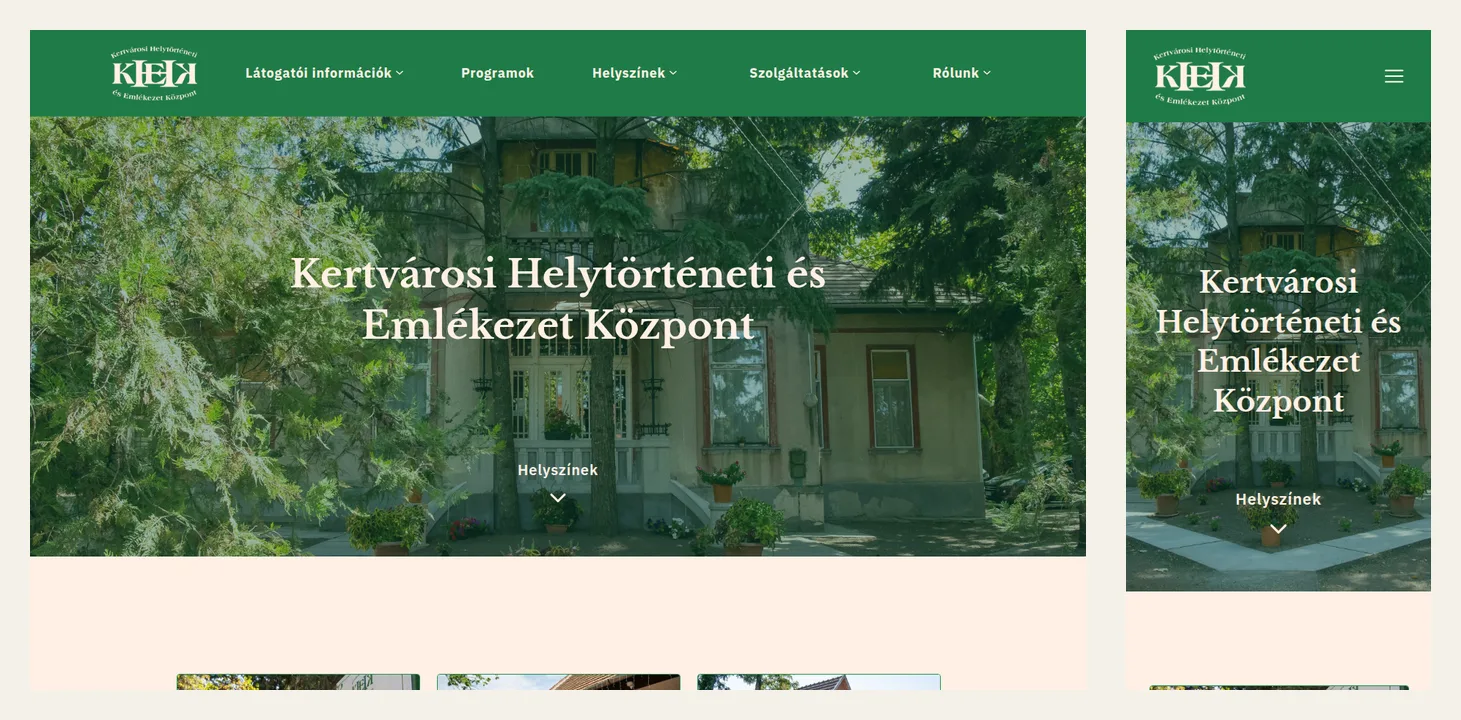
The new website of the Kertvárosi Local History and Remembrance Centre was built in the summer of 2026. The goal was not only to bring everything into one place, but also to let the staff edit it themselves – and to see in the editor exactly what visitors see.
The starting point
One institution, three sites and many kinds of content.
The Kertvárosi Local History and Remembrance Centre is an institution of the 16th district municipality of Budapest, with three sites: the Kertváros Local History Collection, the Cinkota Country House and the Ilonka Tóth Memorial House. Programmes, publications, galleries and press coverage had to appear on one website, together with the content of the old site. The website went live in September.
The condition
Editable without a developer.
An institution's website stays alive only if the staff keep it up to date. So the most important condition was that anyone on the team could add a programme, a volume or a photo – and that the editor shows exactly what appears on the finished page.
The solution
In the collection's own terms, not a generic template.
- 01
Own content types
Programmes, publications, sites, partners and press coverage each got their own data sheet, in the collection's own terms rather than as generic posts.
- 02
Twenty custom editor blocks
Programme carousel and filterable programme list, publication grid, gallery with folders, photo slider, site info with a map, downloadable attachments. We checked each one to make sure it looks the same in the editor as on the finished page.
- 03
The collection's structure leads the site
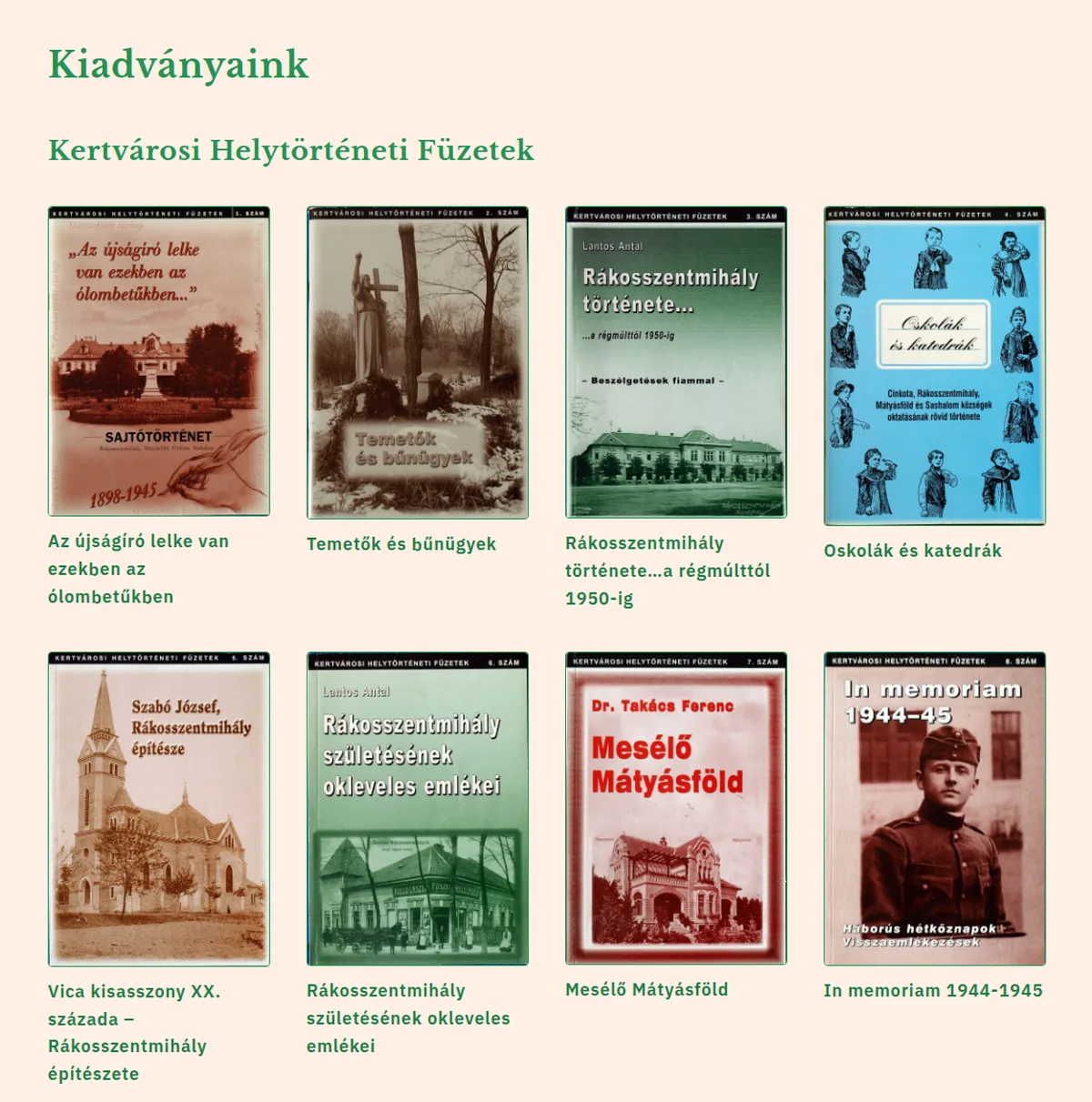
Volumes are grouped by series – the Kertváros Local History Booklets and the volumes outside the series – and loanable exhibitions get their own list.
- 04
Findability basics
Hungarian-language pages, institutional structured data on every page, publications and programmes in the sitemap for search engines.
- 05
Go-live from a test environment
The new website ran on a test address first; the switch-over followed a checklist.
- 06
Accessibility statement
After handover we ran an accessibility check and drafted the institution's accessibility statement. The institution approved the statement, and it is published on the website in its name.
The result
In the institution's words.
“What matters most to us: we upload the content ourselves. We can add a programme, a volume or a photo without a developer, and the editor shows the same thing that visitors see. In the end we did not even need separate training.”
– the team of the Kertvárosi Local History and Remembrance Centre (translated from Hungarian)
Where the content is closed and no longer needs editing, a different route is right: a static site that needs no maintenance. That is what the Hommage case study is about
Next step
Renewing an institutional website, or is the current one hard to edit?
We start with a fixed-price assessment, and that shows which route is right: an editable website or an archive that needs no maintenance.